Book Real Hardware Labs Online

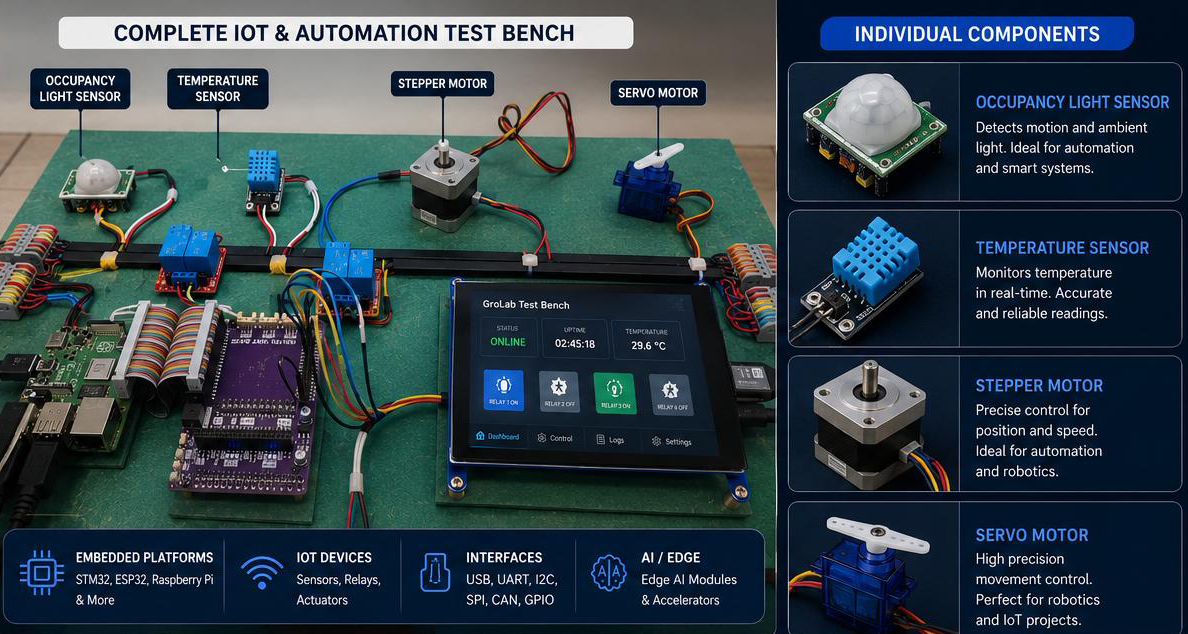
GroLabs gives you remote access to real hardware benches for embedded systems, IoT, automation, communication protocols, and firmware testing. Book a session, connect via browser terminal, SSH, or remote desktop, and watch your code run on real devices through live camera streams.

Available Benches

Raspberry Pi IoT & Automation Bench

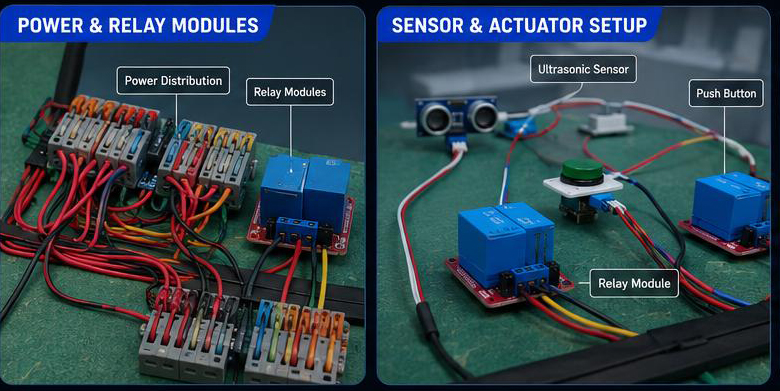
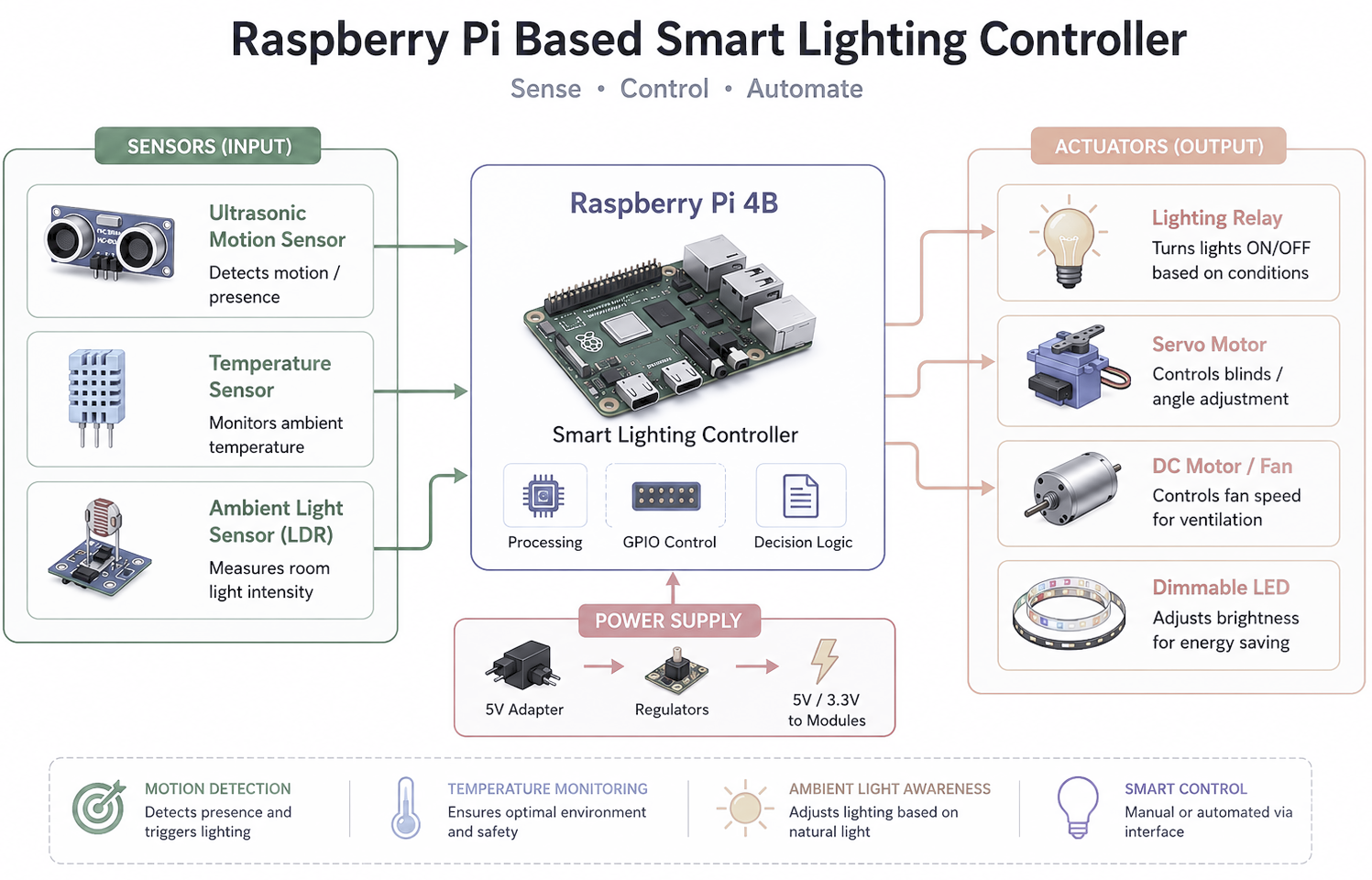
A Raspberry Pi 4B-based remote bench for Python, Linux, GPIO, sensors, relays, and servo motor control. Includes real GPIO-connected peripherals, sample programs, SSH/browser access, remote desktop, and live camera monitoring.

ESP32 IoT & Protocol Bench

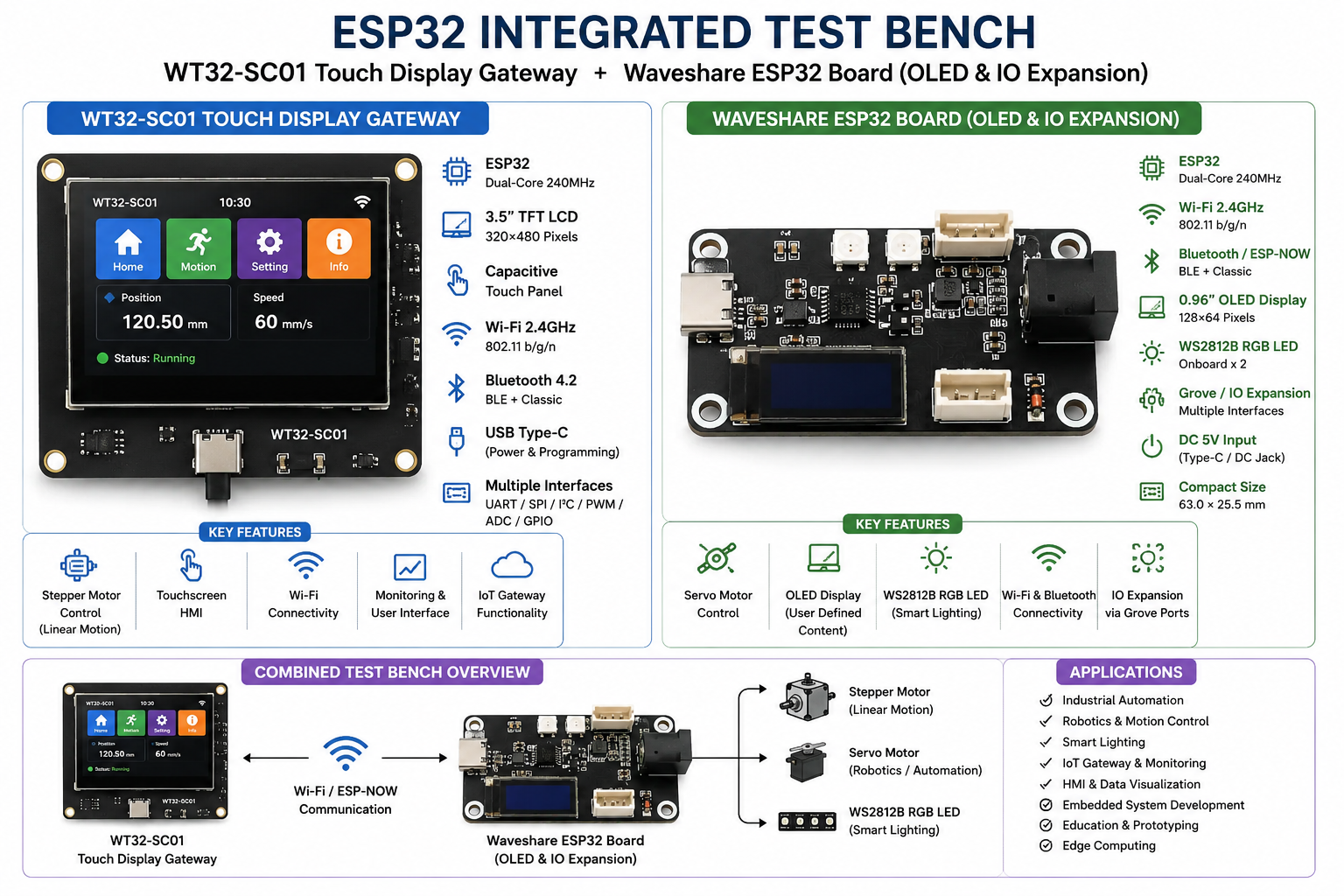
An ESP32-based remote bench for IoT firmware, MQTT, RS485 Modbus, and CAN communication, plus OLED display projects and Arduino-compatible development. Includes embedded debugging with a logic analyzer, live camera view, and remote reset support.

Arduino-Compatible Microcontroller Bench

Built for students and beginners learning digital I/O, sensors, display output, and serial communication using real hardware instead of only simulation.

STM32 Embedded Test Bench

Advanced embedded benches for firmware validation, UART, I2C, SPI, PWM, CAN, and RS485/Modbus, with hardware-in-the-loop style test workflows for colleges, companies, and embedded engineers.

How GroLabs Booking Works

  1. Select a bench and book a session. Choose from Raspberry Pi, ESP32, Arduino-compatible, or STM32 benches, and either start an available session immediately or book a time slot.
  2. GroLabs prepares your environment automatically. A temporary user account and private workspace are created, sample programs are copied in, and your selected hardware modules are made ready.
  3. Connect and work. Access your bench through SSH, browser terminal, or remote desktop. Run code, control physical hardware, reset supported devices, and observe real output through live camera streams.
  4. Session ends cleanly. Access is revoked, your workspace can be archived, and the hardware resets to a safe state for the next user.

Who Can Use GroLabs

  • Students and learners — Practice Raspberry Pi, ESP32, Arduino-compatible development, STM32, sensors, relays, IoT, MQTT, Modbus, CAN, and embedded programming on real hardware from anywhere.
  • Colleges and training institutes — Offer remote hardware labs for embedded systems, IoT, microcontrollers, and communication protocol coursework without requiring every student to own a full kit.
  • Hobbyists and makers — Try real hardware projects and control real devices without setting up a home lab.
  • Companies and engineering teams — Use GroLabs for remote training, prototype testing, firmware validation, hardware demos, and controlled test-bench access for distributed teams.

Pricing

  • Free/demo sessions for selected benches
  • Pay-per-session access for individuals
  • Credit-based usage for repeat users
  • Subscription plans for colleges and training institutes
  • Bulk access plans for companies and engineering teams
  • Custom pricing for advanced STM32, protocol, or test benches

Frequently Asked Questions

Do I need to own the hardware to use GroLabs?

No. GroLabs gives you remote access to real physical hardware benches — Raspberry Pi, ESP32, Arduino-compatible, and STM32 — so you can run real experiments without buying or wiring anything yourself.

How do I access a GroLabs bench?

Through SSH, a browser-based terminal, or remote desktop, depending on the bench and your session setup, with a live camera view to observe physical hardware output in real time.

Can I reset the hardware if something goes wrong during a session?

Yes, for supported benches like the ESP32 Protocol Bench, remote reset lets you recover and restart your experiment without ending the session.

Is GroLabs suitable for college coursework?

Yes. Colleges and training institutes can use GroLabs for embedded systems, IoT, and communication protocol coursework, with subscription and bulk-access plans available.

What protocols and hardware does GroLabs support?

GPIO, sensors, relays, and servo motors on Raspberry Pi; MQTT, RS485 Modbus, and CAN on ESP32; digital I/O and serial communication on Arduino-compatible boards; and UART, I2C, SPI, PWM, CAN, and RS485/Modbus on STM32.